 how-to
How to Pair Craft Beer and Food, Step by Step
Last Updated: November 10, 2026
Quick Summary
Craft beer and food pairings work when the beer's bitterness, sweetness, carbonation, and body match the dish's richness, heat, and intensity. A cold lager suits salty snacks, while a hoppy IPA suits spicy or fried food. Note the first sentence is the direct answer; the phrase "beer and food pairings" is included in the answer text.
- Bitterness from hops cuts through fat and rich sauces.
- Malt sweetness softens spice and balances acidic dishes.
- Carbonation scrubs the palate clean between bites.
- Match the beer's body to the weight of the dish.
- Test pairings with a bite, sip, bite sequence and score them.
Table of Contents
- Know the Four Beer Traits That Drive Pairings
- A Beer Pairing Chart by Beer Style
- Craft Beer and Food Pairings Ideas for Common Dishes
- Build a Repeatable Tasting Method at Home or at the Table
- Pairing for Vegetarians, Kids, and Alcohol-Free Guests
- Planning a Beer and Food Pairing Menu for a Group
- Recipes That Match Their Beer Partners
- Frequently Asked Questions
Craft beer and food pairings work because beer and food share the same basic building blocks: bitterness, sweetness, acidity, carbonation, body, and flavor intensity. When those elements line up well, the beer and the meal make each other taste better.
The idea is simple. A beer can cut through richness, calm down heat, or add a layer of flavor that the food lacks. Most people already do this without thinking. A cold lager with a salty snack or a hoppy ale with a spicy burger both work because the beer does a specific job. You can compare how such pairings are structured on the restaurant menus page.
Pairing is a skill, not a guessing game. Once you understand what the beer brings to the table, you can make good choices every time.
Know the Four Beer Traits That Drive Pairings
Every beer has traits that either clash with food or complement it. Learn these four first, and most pairing decisions become easier.
- Bitterness from hops can cut through fat and rich sauces.
- Sweetness from malt can soften spice and balance sour or acidic dishes.
- Carbonation scrubs the palate clean between bites.
- Body and intensity should roughly match the weight of the food.
Bitterness, Sweetness, and Carbonation
Bitter beers, like many IPAs, work well with fried foods and fatty meats. The bitterness resets your taste buds after each bite. Sweeter beers, like amber ales, balance heat and acidity. Bubbles from carbonation clear residue from the mouth, which is why sparkling styles pair so well with fried chicken.
Body, Intensity, and Heat
Match the weight of the beer to the weight of the dish. A light blonde ale can get lost next to a braised short rib, while a big stout can overwhelm a delicate seafood plate. For spicy food, pick a beer with lower alcohol and some malt sweetness to soften the burn.
A Beer Pairing Chart by Beer Style
Use this chart as a starting point. It works for most casual and mid-range restaurant menus.
| Beer Style | Flavor Profile | Best Food Matches | Watch Out For |
|---|---|---|---|
| Light lager or Pilsener | Crisp, clean, light | Salads, seafood, light appetizers | Can disappear next to rich dishes |
| Wheat beer | Citrusy, soft, light | Shellfish, fresh greens | Too mild for heavy meat |
| Blonde ale | Balanced, slightly sweet | Fried chicken, burgers | Little impact with strong spice |
| India pale ale (IPA) | Bitter, floral, fruity | Spicy food, fried foods | Can overpower delicate fish |
| Porter | Roasted, malty | Pork, ribs, chocolate desserts | Heavy for light meals |
Craft Beer and Food Pairings Ideas for Common Dishes
Here are simple matches to try on your next visit:
- Fried chicken with a blonde ale. The sweetness and carbonation balance the crispy coating.
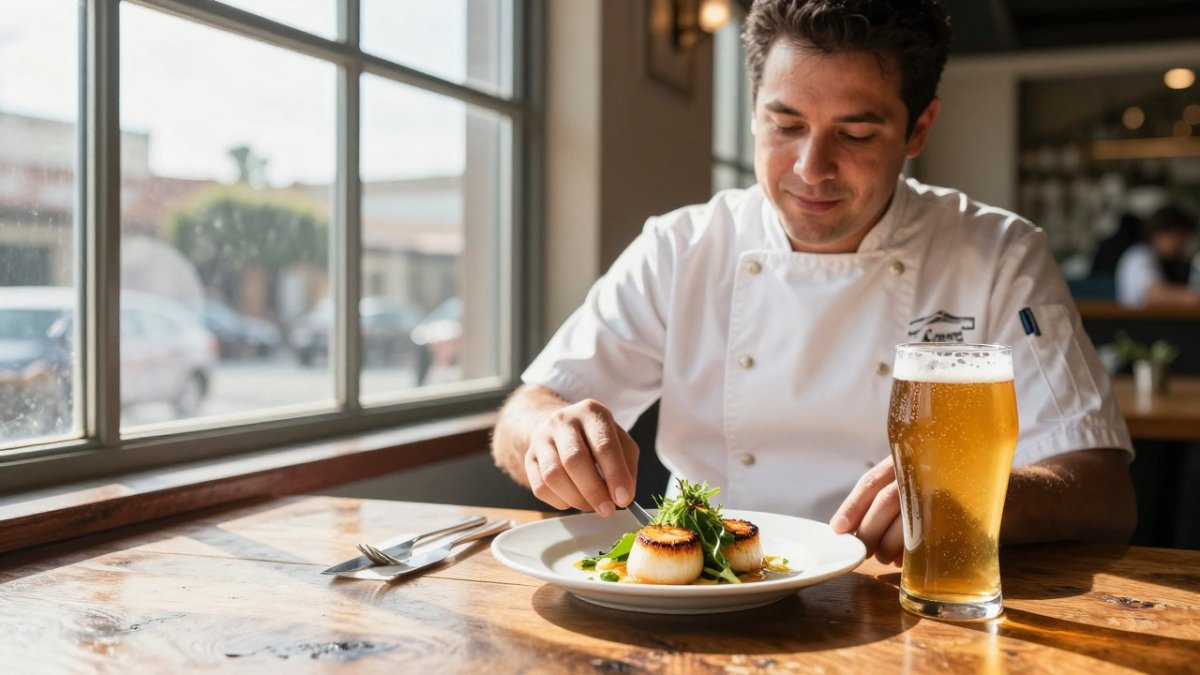
- Fresh seafood with a wheat beer. Citrus notes highlight the brine.
- Spicy dishes with an IPA. Bitterness cools the heat without making it muddy.
- Burgers with a pale ale. The malt pairs with grilled beef.
- Chocolate dessert with a porter. Roasted malt echoes the cocoa.
Watch out: Heavy stouts with delicate fish can flatten the flavor of the seafood entirely.
Build a Repeatable Tasting Method at Home or at the Table
Most pairing advice tells you what goes together. Far fewer explain how to test a match yourself, so you can learn why a combination works and adjust it when it does not. The method below is built for a home kitchen or a restaurant table and takes about ten minutes per pairing.
Step 1: Name the dominant flavor of the food. Before you open the beer, decide what the dish is mainly doing. Is it rich and fatty, like a bacon cheeseburger? Is it hot, like a chili with chipotle? Is it sour or acidic, like a vinaigrette-dressed salad? Write down one or two words. This is the anchor for the rest of the test.
Step 2: Taste the beer alone at serving temperature. Pour the beer into the glass you plan to use and let it sit for a minute or two if it is very cold. Cold beer mutes aroma, so a lager served ice-cold will taste thinner than the same lager at about 45 to 50 degrees Fahrenheit. Note whether the dominant trait is bitterness, malt sweetness, roasted character, fruitiness, or carbonation.
Step 3: Take a bite of food, then a sip of beer, then a bite of food again. The first bite of food sets the baseline. The sip shows what the beer does to that baseline. The second bite shows whether the effect lasts or fades. Pay attention to three questions: Did the beer make the food taste fresher, heavier, or sweeter? Did the heat get louder or quieter? Did the beer's flavor survive, or did it disappear?
Step 4: Score the result. Give the pairing a simple verdict: lifts, neutral, or clashes. A lift means both the food and the beer taste better together. Neutral means nothing much changed. A clash means one or both flavors became harsh, metallic, or flat. Keep this honest and brief. Most useful learning comes from noticing clashes.
Step 5: Adjust one variable and retest. Change only one thing at a time. You can swap to a beer with more or less bitterness, move to a beer with more malt sweetness, add a squeeze of lemon to the food, or serve the beer slightly warmer. Retest with the same bite-and-sip sequence. Changing several variables at once makes it impossible to know which change helped.
A short example shows how this works. Suppose the dish is a fried chicken sandwich with spicy mayonnaise. Step 1 gives you two words: fried and hot. Step 2 shows that a cold, very bitter IPA tastes sharp. Step 3 shows the bitterness makes the heat feel stronger. Step 4 rates it as a clash. Step 5 swaps to a blonde ale with more malt sweetness, and the retest rates it as a lift, because the sweetness softens the chili and the carbonation cleans the fat off the palate.
Watch out: Do not judge a pairing on the first sip if the beer is very cold or the food is very hot in temperature, because both can change the flavor you perceive. Let each element settle for a moment before you decide.
Pairing for Vegetarians, Kids, and Alcohol-Free Guests
Pairings do not have to center on meat, and many guests at a table will not drink alcohol at all. Before you plan, confirm the venue suits your guests on the accessibility page. The same logic of bitterness, sweetness, carbonation, and body still applies, so you can build good matches for everyone at the table with a few adjustments.
Vegetarian and vegan dishes. Roasted vegetables with caramelized edges pick up the toasty character of amber ales and brown ales. A roasted cauliflower or mushroom dish with a smoky seasoning works well with a porter, because the roasted malt echoes the browned surfaces. Fresh salads with citrus dressing pair well with a wheat beer, since the beer's soft citrus notes match the acid. Bean chili made without meat often benefits from an IPA, because the bitterness cuts the earthiness of the beans and cools the heat.
Gluten-free guests. Many craft beers are made with barley and are not safe for people with celiac disease. Several breweries now produce beers made from sorghum, rice, or other grains, and these are labeled gluten-free in the United States under federal labeling rules for that term. Check the label or the brewery's information before serving, and do not assume a beer is safe because it is pale or light in style. For guests with celiac disease, a cider or a gluten-free beer with clear labeling is the safer choice.
Dairy-free and nut-free dishes. Dairy-free meals often rely on acid and herbs, which pair well with beers that have bright carbonation. A light lager or a wheat beer lifts a dairy-free herb dressing without competing with it. Nut-free desserts made with dark chocolate suit a porter, and fruit-based desserts suit a fruit-forward wheat beer or a fruited sour.
Kids at the table. For younger guests, a mild blonde ale or a non-alcoholic craft beer keeps the table feeling shared without introducing alcohol. Non-alcoholic beers still carry malt sweetness, bitterness, and carbonation, so the same pairing method applies. A non-alcoholic wheat beer with grilled chicken or a non-alcoholic amber with a vegetable pizza makes a sensible match for a family meal.
Alcohol-free and lower-alcohol guests. Non-alcoholic beers vary widely. Some taste close to their full-strength versions, while others are thinner and sweeter. Choose a non-alcoholic option that matches the body of the food, since a very light non-alcoholic beer can disappear next to a rich burger. Lower-alcohol beers in the range of about 3 to 4 percent alcohol by volume are another option, and they keep the pairing lighter when the meal is long.
Watch out: Serving a non-alcoholic beer as if it were a full-strength beer can leave guests feeling underserved if the flavor is much thinner, so set expectations by naming the style when you pour.
Planning a Beer and Food Pairing Menu for a Group
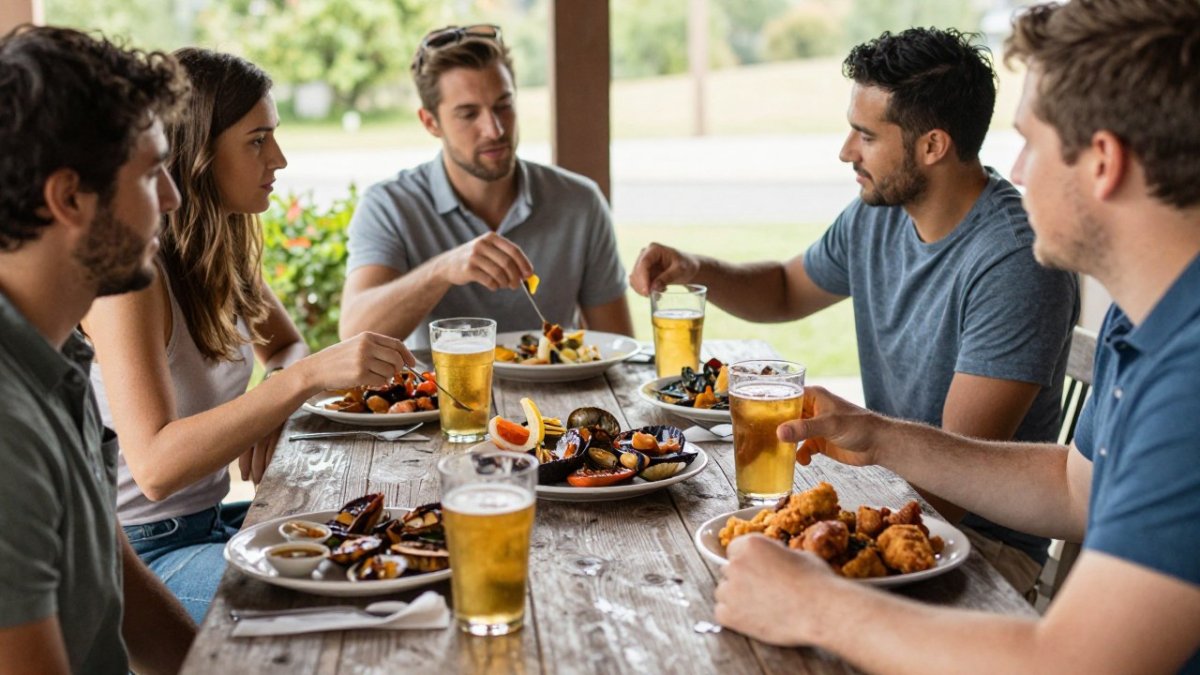
Groups need a plan so that everyone finds something they enjoy. Choose three to four beers that cover light, medium, and bold styles. Then match one beer to each course. Friends seated together over shared plates, with craft beer in hand, is a classic way to test this approach. Check the large group dining page to see whether private parties and group seating are available.
Recipes That Match Their Beer Partners
Cooking with beer carries the flavor into the meal itself. A beer-battered fish pairs naturally with the same beer served alongside it. A porter reduction glaze on pork ribs echoes the roasted malt in the glass. Start with a beer you already enjoy, then cook a dish that uses it as an ingredient.
Our team at Sur Carmel tries new pairings every season, so the menu keeps evolving. Ready to put these ideas into practice? Make your reservation and let us help you find the right beer for every plate.
Frequently Asked Questions
What food pairs well with craft beer?
Craft beer pairs well with foods that share or contrast its main traits. Hoppy beers such as IPAs cut through rich, fried, and fatty foods, while malty amber ales and porters complement roasted meats and caramelized dishes. Light lagers and wheat beers suit seafood, salads, and lighter fare. Start with the beer's bitterness, sweetness, and body, then match those to the dish's richness, acidity, and heat. A simple rule: lighter beers for lighter food, bolder beers for bolder food.
What is the 3:30-300 rule for beer?
The 3:30-300 rule is a common serving guideline, not a formal standard. It suggests pouring beer at about 3 to 3.5 degrees Celsius for the chill, and using a glass that holds around 300 milliliters for an ideal pour size. Serving temperature and glassware change how aroma and bitterness come across, so they affect how a beer pairs with food. Colder serving temperatures mute flavor, while slightly warmer beers reveal more malt and hop character. Adjust the temperature for darker, stronger styles.
Which craft beers pair best with seafood?
Light, crisp beers work best with most seafood. Pilsners, blonde ales, and wheat beers have enough acidity and carbonation to clean the palate after oily fish and shellfish. For fried seafood, a hoppy pale ale or IPA cuts through the batter, while delicate white fish pairs well with a lighter wheat beer. Avoid heavy stouts with delicate seafood, since their roasted flavors can overpower the dish.
How do you pair beer with vegetarian food?
Vegetarian dishes often match well with beers that emphasize freshness and balance. Salads and vegetable plates suit crisp lagers and wheat beers, while grilled vegetables and mushrooms pair with amber ales. Hearty dishes built on beans or grains can handle a malty brown ale. For a non-alcoholic option, many craft brewers now offer alcohol-free beers with similar flavor profiles, so guests can still enjoy a deliberate pairing.
